
It is common in industrial operations for the first step toward reducing fuel consumption to be adding solar panels to a plant with generators. The initial results are positive. But over time, the savings level off or decline, episodes of instability appear, and the generator keeps running more than expected.
The problem is not the panels: it is that the equipment is not integrated under a common control logic. That distinction between adding sources and integrating them is what defines a real hybrid system. And it is what determines whether the investment delivers on its promise.
What is a hybrid energy system
A hybrid energy system is an architecture that combines two or more sources —such as solar generation, battery storage, generator sets, and in many cases the utility grid itself— under a control logic that decides at all times how to use each one. This principle is the foundation of what is known as an industrial electrical microgrid.
The central distinction: a hybrid system is not the sum of its sources, it is their integration. Adding panels to a plant with generators does not create a functional hybrid system if the control does not coordinate how they interact.
The panels generate, but if the control system does not know what to do with that energy in a coordinated way with the generator, the result falls far short of what is possible.
That is why two installations with exactly the same equipment can produce completely different operational results.
Why hybrid systems emerged
Many organizations add solar panels to reduce fuel consumption. The first months show positive results, but over time problems appear that no one anticipated:
- The generator keeps running just as before.
- Savings level off or decline.
- On cloudy days, instability events occur.
What happens is not a problem with the panels, but with integration.
The driver is economic and operational: reducing fuel consumption and dependence on a single source, integrating renewables without losing the reliability that conventional generation provides.
The challenge they introduced (and that defines the design) is the coordination between sources with very different behaviors: the sun is variable, batteries have finite capacity, and the generator is stable but costly to operate at low load.
Solar + generator configuration: limited results without batteries
It is the most widespread configuration in early stages of remote projects. It reduces consumption during sunlight hours, but has a structural limitation: without batteries, the generator cannot be shut down.
The main reason is that the generator provides the voltage and frequency reference for the solar inverters. Without that reference, the photovoltaic system has nothing to synchronize against and cannot operate.
Additionally, the generator must always be available to respond when demand exceeds solar generation or when a cloud reduces output in seconds.
To maintain that response capability, the engines end up operating at partial load during the hours of highest solar generation (the range where they are least efficient).
In the field, this configuration significantly reduces fuel consumption compared to an operation based exclusively on generators, as shown in the solar and thermal generation integration case in Córdoba.
Solar + BESS configuration: greater renewable utilization
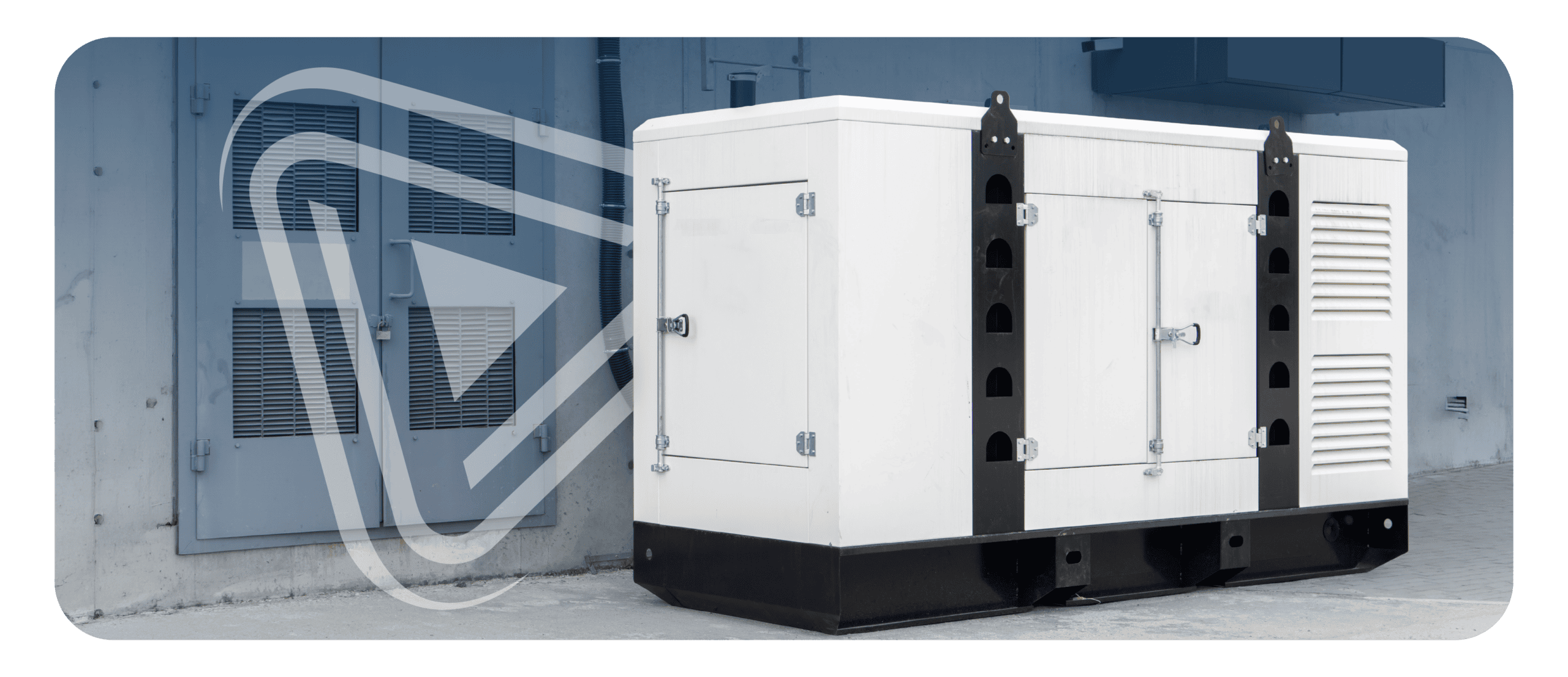
Adding storage makes it possible to capture the solar surplus that immediate demand does not consume and use it when the sun drops or stops. The generator can significantly reduce its operating hours.
The critical point is BESS sizing: if the battery bank is undersized thinking that “the generator will cover the rest,” the generator ends up operating in the same inefficient ranges as before and the BESS fails to fulfill its function.
One of the most common mistakes is sizing the BESS based on general consumption estimates instead of using the actual nighttime load profile of the site.
That difference often determines whether the generator can be shut down or whether it will continue operating at low load for most of the time.
Solar + BESS + generator configuration: the most complete architecture
It is the configuration that enables the highest level of operational efficiency, assigning each source a clearly defined role within the system.
Photovoltaic generation
Serves as the primary energy source during periods of solar resource availability, supplying most of the demand and minimizing fuel consumption.
Battery energy storage system (BESS)
Stores surplus photovoltaic generation, supplies energy when it is insufficient, absorbs transient power variations, and, when no other voltage and frequency reference is available, establishes the electrical conditions necessary for photovoltaic generation to operate.
Generator set
Acts as a backup source, providing power when the remaining system sources cannot meet demand. When the control strategy requires it, it can assume grid-forming operation, providing the voltage and frequency reference necessary for renewable source operation.
As a result, the generator set ceases to operate as the primary energy source and only intervenes when system conditions require it, significantly reducing its operating hours, fuel consumption, and CO₂ emissions.
All of this depends on a control strategy correctly defined from basic engineering: the coordination criteria between sources, BESS energy management, and the generator start, stop, and transfer conditions.
If that logic is not defined from the beginning, the system does not optimize: it reacts.
The role of the utility grid in hybrid systems
In on-grid applications, the utility grid operates as an additional system source. The control logic coordinates its interaction with local sources, enabling functions such as peak shaving, backup during grid failures, or surplus export. The principle is the same: each source fulfills a role defined by the control strategy, not by its mere presence.
What distinguishes a hybrid system that works from one that doesn’t
The most common problems in the field are not equipment problems, they are design problems:
- The generator runs more than expected: the start thresholds did not account for the actual demand profile or BESS degradation over time.
- Equipment does not communicate properly: components from different manufacturers without native integration create response delays, and those delays become interruption events.
- The system does not respond to cloud transients: the BESS response speed was not specified for that scenario.
Projects such as the hybrid microgrid at a packaging factory in Brazil show how coordinating multiple sources under a unified control logic enables operation with greater efficiency and stability.
Solving these problems during operation typically requires modifications that are significantly more expensive than addressing them during basic engineering.
That is why upfront design is not an additional cost: it is the difference between a system that delivers on its promise and one that does not.
A hybrid energy system is worth its integration, not its components
The value of a hybrid system is not in the sum of its components, it is in the quality of its integration. A well-designed architecture turns independent sources into a coordinated system that reduces costs, extends asset life, and operates predictably.
That integration work begins before the equipment is purchased.
Hybrid system integration from basic engineering
A hybrid energy system performs according to the quality of its integration, and that integration is defined from basic engineering. The hybrid microgrid architectures that Servintel designs and integrates operate under a single control strategy that coordinates each source —solar, BESS, and generator— based on real-time system conditions.
For operations that grow or incorporate new sources over time, that logic is supported by scalable control solutions that accompany the system’s expansion.
In a hybrid system, equipment provides capacity. The control strategy determines how that capacity becomes operational performance.
In summary
What are the configurations of a hybrid energy system?
The three most common configurations in systems with local generation are: solar + generator, solar + BESS, and solar + BESS + generator. Of those presented in this article, the latter enables the highest level of optimization because the generator is no longer the primary source and only operates when the system requires it. Photovoltaic generation is the most common renewable source in these systems, but the same integration principle applies when the renewable source is wind, hydroelectric, or another type, whether as a replacement for or complement to solar, in both on-grid and off-grid configurations.
Why can’t the generator be shut down in a solar + generator configuration?
Because the generator provides the voltage and frequency reference for the solar inverters: without that reference, the photovoltaic system has nothing to synchronize against and cannot operate. Additionally, it must be available to respond when demand exceeds solar generation
Why can two systems with the same equipment produce different operational results?
Because the difference is in the control strategy, not in the components. A system without coordination logic reacts to events; one with integration engineering anticipates them.
Other news
What Is an Industrial Electrical Microgrid and How Does It Work?
An industrial electrical microgrid responds to a specific operational condition: the public grid cannot be the facility’s only source of energy. This condition has three different origins: The distribution infrastructure...



Login
Plesase enter with your email and password here.
You don’t have an account? Register here
Your username has been successfully registered for this course.
We will notify you by email when it’s available.