An industrial electrical microgrid responds to a specific operational condition: the public grid cannot be the facility’s only source of energy.
This condition has three different origins:
- The distribution infrastructure does not reach the location — remote operations, high-altitude mining, offshore facilities.
- The quality of the power supply is outside the tolerance required by critical processes — outages, voltage variations, frequency outside the specified range.
- The tariff structure makes the cost of imported energy compromise the project’s operational viability.
In any of these scenarios, the technical solution is the same: an own generation, storage, and control architecture that operates autonomously or in coordination with the grid according to system conditions.
This guide explains what an electrical microgrid is, how it works, how it is structured, and in which industrial contexts it represents the right technical solution.
What Is a Microgrid? Definition and Current Context
A microgrid is a local energy generation, distribution, and control system that can operate connected to the public grid or completely autonomously, depending on system conditions and operational requirements.
It is not a backup generator or a large-scale UPS. It is an independent infrastructure that coordinates multiple energy sources — the Grid, generator sets, solar panels, batteries — under a unified control logic that continuously determines how to meet the plant’s demand in the most efficient and reliable way possible.
Key concept: in a microgrid, the public grid is one more source within the control system, not the sole source of supply.
How does a microgrid differ from a conventional electrical grid?
The fundamental distinction is that, in a microgrid, the public grid becomes one more source within the control system, rather than the sole source of supply. The control system determines when to use it, when to generate power locally, and when to store energy.
How a Microgrid Works: The Three Layers
A microgrid is not a piece of equipment; it is an architecture. It consists of three layers that must be designed and operated as an integrated system:
Generation and Storage Layer
The system sources that produce or store energy (the Grid, generator sets, solar panels, battery energy storage systems (BESS), turbines). Each has its own characteristics, protocols, and operating limits, providing the energy required to meet the microgrid’s demand.
Electrical Control Layer (PMS)
The system that maintains stable operation of the electrical system as a whole (generator synchronization, automatic transfers, and fault protection). This is the layer that prevents a grid failure or electrical disturbance from causing an interruption in the internal power supply. Transitions are executed automatically according to the strategy defined for the application.
Energy Management Layer (EMS)
The system that coordinates the use of the different energy sources according to operational, economic, and availability criteria. It determines when to start the generator, when to charge the batteries, when to use solar energy, and how to manage demand peaks, optimizing the overall performance of the system.
If the three layers are not integrated, the equipment may be correctly selected and installed, but the microgrid will not achieve the performance, efficiency, and reliability levels expected for the application.
Learn more about the EMS/PMS architecture.
Main Components of a Microgrid
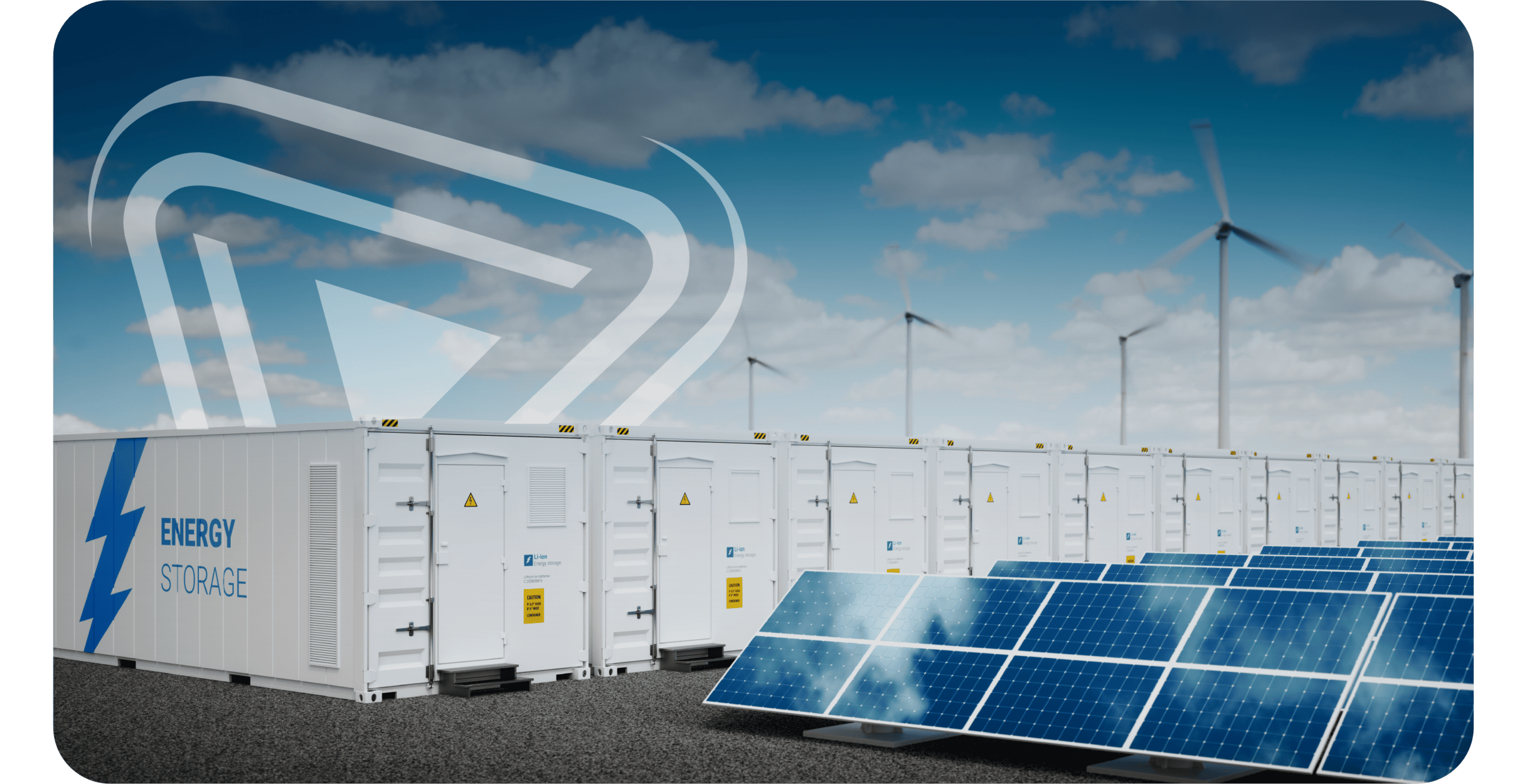
- Generation: the Grid, diesel- or gas-fired generator sets, photovoltaic panels, and, depending on the project, other sources (wind, turbines).
- Storage: the BESS, which stores energy and delivers it when the system requires it.
- Power conversion: inverters and PCS that convert energy between direct current and alternating current, allowing the BESS and photovoltaic sources to operate within the generation architecture.
- Control and supervision: the EMS and PMS, together with the controllers for each asset and the local or remote monitoring system.

Operating Modes: Grid-Connected vs. Islanded Microgrid
The ability to switch between different operating states is what defines the versatility of a microgrid. The system must be capable of managing energy both when the electrical grid is available and when it is not, always ensuring continuity and efficiency of the power supply.
Grid-Connected Mode (ON-GRID)
The system operates together with the public grid, which acts as the voltage and frequency reference. The EMS determines in real time how much energy to draw from the grid, how much to generate locally, and how much to store, with the objective of reducing energy costs and avoiding demand peaks.
Island Mode (OFF-GRID)
When the grid fails — or is not part of the system — the microgrid maintains operation using its own resources. This means that the control architecture itself must establish and maintain the voltage and frequency reference, coordinating the available resources to supply the demand in a stable manner.
The transition between modes is the most critical point of the system. A poorly designed transfer can cause exactly the outage the system was intended to prevent. The transition logic is one of the aspects defined in greatest detail during basic engineering, since a significant part of the microgrid’s operational behavior will depend on it.
Advantages of Microgrids for Industry and the Naval Sector
By integrating generation, storage, and the grid under a single energy strategy, a microgrid not only solves the operational problem that led to its implementation, but also enables a series of concrete benefits..
Cost Reduction and Energy Independence
When the tariff structure compromises project viability, a microgrid allows the system to determine when to draw energy from the grid and when to generate it locally. Control over energy means control over operating costs.
Operational Continuity During Outages or Failures
The electrical control layer (PMS) synchronizes generators, executes automatic transfers, and provides fault protection, preventing an electrical disturbance from interrupting the internal power supply.
Sustainability and Emissions Reduction
For industries with emissions reduction targets, integrating renewable sources with operational reliability requires an architecture that makes both objectives compatible.
Adaptation to Multiple Industrial Environments
Industrial microgrids are particularly relevant in:
- Mining and oil & gas: remote operations where the grid does not reach the site or is unreliable and diesel cost is the most critical variable.
- Critical infrastructure: data centers, hospitals, and telecommunications, where an outage has consequences that go beyond the economic cost.
- Ports and naval facilities: high on-site demand, with the possibility of integrating renewable sources and reducing fuel consumption in port operations.
- Agroindustry and continuous production: where an outage results in process or product losses.
- Industries with emissions reduction targets: where integrating renewable sources with operational reliability requires an architecture that makes both objectives compatible.
Hybrid Microgrid Management: How It Works in Practice
As operations scale and incorporate renewable sources, the microgrid moves from solving a supply problem to solving a coordination problem between multiple energy sources.
When a microgrid integrates renewable sources alongside conventional generation, coordination becomes more complex. Hybrid microgrid management is the area where the control architecture determines whether that integration will be efficient or simply expensive.
Two published cases illustrate this management in practice: the hybrid microgrid at Granja São Rafael (Brazil) and the hybrid microgrid at a packaging factory (Brazil).
What Changes When a Microgrid Is Implemented
The main change is that generation, storage, and the grid cease to operate as independent systems and become part of a single energy strategy. The result is a system whose energy behavior no longer depends solely on external conditions, but instead responds to a control logic specifically designed for the application’s concrete requirements.
This does not mean total independence. It means control. And for an industrial operation of any scale, control over energy means control over operating costs.
- Hybrid Microgrid Management — Servintel
- Efficient Control and Management of Critical Energy
- EMS/PMS Architecture in Industrial Energy Systems
Frequently Asked Questions
What are microgrids?
They are local energy generation, distribution, and control systems that can operate connected to the public grid or autonomously, coordinating sources such as generators, solar panels, and batteries under unified control.
What do the PMS and EMS do in a microgrid?
The PMS synchronizes generators, executes automatic transfers, and provides fault protection. The EMS determines when to start the generator, charge batteries, or use solar energy, while managing demand peaks.
In which industries are microgrids used?
Primarily in mining, oil & gas, critical infrastructure, ports and naval facilities, and agroindustry, where energy continuity or the cost of imported energy are determining factors.