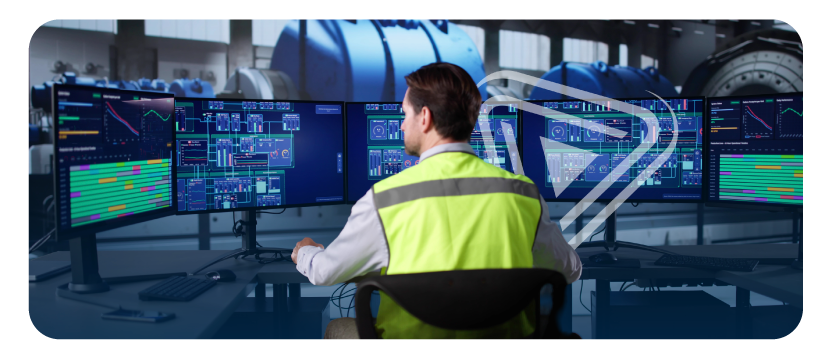
In industry, energy efficiency no longer depends solely on the type of equipment installed, but on how energy flows are managed, controlled, and coordinated in real time. This type of industrial energy automation in plants allows moving from reactive management to intelligent energy control based on data and real-time decisions.
In this context, it becomes a key tool to:
- Reduce electrical consumption
- Optimize fuel usage
Increase operational reliability
Integrate multiple energy sources
Unlike traditional approaches, where energy is managed reactively, automation allows operating with control logic, data, and real-time decisions.
In this article, we explore what industrial energy automation is, how it is implemented, and what real impact it has on costs and sustainability. - Increase operational reliability
- Integrate multiple energy sources
Unlike traditional approaches, where energy is managed reactively, automation allows operating with control logic, data, and real-time decisions.
In this article, we explore what industrial energy automation is, how it is implemented, and what real impact it has on costs and sustainability.
What is industrial energy automation?
Industrial energy automation is the application of control, monitoring, and management systems that allow regulating, optimizing, and coordinating energy use in a facility.
This includes:
- Generation control (diesel, gas, biofuels).
- Integration of renewable energy.
- Management of critical and non-critical loads.
- Consumption monitoring and analysis.
Unlike a conventional electrical system, where equipment operates independently, energy automation connects all elements under a common logic.
How is industrial energy automation implemented in practice?
In practice, this automation is implemented through architectures that combine:
- PMS (Power Management System): for generation control, load control, and electrical stability.
- EMS (Energy Management System): for optimization of energy use at a global level.
The objective is not only to operate the system, but to dynamically optimize it based on demand, energy availability, and operating conditions.
Why energy automation is key in industrial and marine environments
Many industrial facilities already measure energy. But measuring is not the same as controlling.
The real leap occurs when the system can:
- Adjust generation according to demand.
- Prioritize energy sources.
- Limit unnecessary consumption.
- Respond to grid events.
Automation turns information into action, transforming data into operational decisions.
Key technologies for energy automation
Industrial energy automation is structured in multiple integrated layers. Each layer fulfills a specific function within the control architecture.
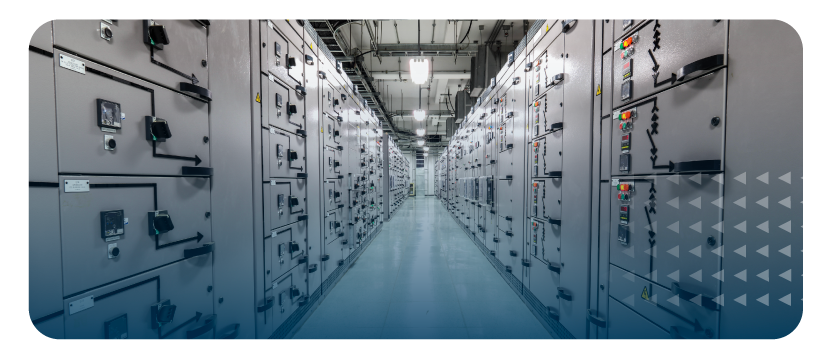
Critical energy control and operational continuity
In applications where energy continuity is critical —such as data centers, hospitals, mining, or certain industrial environments— the system must guarantee uninterrupted supply.
This implies:
- Generator synchronization.
- Automatic transfers.
- Load control.
- Contingency management.
Learn about Servintel’s critical energy control solution.
Hybrid microgrid automation
The incorporation of multiple energy sources introduces operational complexity. Intelligent energy systems allow:
- Prioritizing sources based on cost or availability.
- Reducing the use of fossil fuels.
- Stabilizing the internal grid.
This type of coordination is managed by EMS systems, which allow defining strategies such as source prioritization, cost optimization, energy balancing, and consumption reduction.
Learn about Servintel’s hybrid microgrid management solution.
Industrial energy controllers
Energy automation does not depend on a single component, but on a layered architecture.
Within this architecture, controllers fulfill the function of:
- Executing local control logic.
- Managing specific equipment (engines, generators, loads).
Translating system decisions into operational actions.
They are not the system itself, but an execution layer within a broader control strategy.
Explore the control solutions available at Servintel:
Diesel and gas engine control
Motor-compressor and motor-pump control systems
Standby and prime generator control - Translating system decisions into operational actions.
They are not the system itself, but an execution layer within a broader control strategy.
Explore the control solutions available at Servintel:
- Diesel and gas engine control
- Motor-compressor and motor-pump control systems
- Standby and prime generator control
Cloud and local monitoring systems
Without visibility, there is no optimization. Monitoring systems allow:
- Analyzing energy consumption.
Detecting deviations.
Evaluating performance.
Generating operational traceability.
Learn about Servintel’s cloud or on-site monitoring solutions. - Detecting deviations.
- Evaluating performance.
- Generating operational traceability.
Learn about Servintel’s cloud or on-site monitoring solutions.
Real benefits of energy automation
Industrial energy automation generates concrete impacts on operations, especially in costs, efficiency, and system reliability.
- Reduction of operating costs and energy consumption
The reduction of electrical consumption in plants does not occur through a single action, but through the coordination of multiple variables. Some operational examples:
- Smart start and stop of equipment.
- Dynamic adjustment of generation.
- Elimination of idle operation.
- Coordination of simultaneous loads.
In systems with self-generation, these decisions are executed by a PMS, which regulates generator synchronization, load distribution, and frequency and voltage stability.
- Integration of renewable energy and biofuels
In hybrid environments, energy automation for companies also allows:
- Reducing the use of fossil fuels.
- Integrating renewable energy into operation.
Incorporating biofuels as a sustainable alternative.
Discover Servintel’s engine conversion solutions to biofuels. - Incorporating biofuels as a sustainable alternative.
Discover Servintel’s engine conversion solutions to biofuels.
- Improvement in reliability and service continuity
The system acts before failures occur, adjusting parameters in real time and responding to grid events without manual intervention. This eliminates reactive management and improves operational reliability.
- Integration with existing infrastructure
One of the main challenges in industry is that facilities are already in operation. Energy automation is designed to integrate with new equipment, legacy equipment, and systems without digital control.
The objective is not to replace, but to coordinate and optimize what already exists, through communication interfaces, signal adaptation, and progressive integration.
Energy automation and energy efficiency: a key relationship
While energy efficiency measures performance, automation allows actively improving it in real time.
Supported by EMS and PMS systems, industrial energy automation allows transforming energy into a controllable variable within the production process.
In environments where energy directly impacts costs, reliability, and efficiency, the ability to measure, decide, and act in real time ceases to be an incremental improvement and becomes an operational condition.
This turns industrial energy automation into a key tool for energy management in complex environments.
For more information, we invite you to read our article on what energy efficiency is and how it is measured.
While energy efficiency measures performance, automation allows actively improving it in real time. Supported by EMS and PMS systems, industrial energy automation allows transforming energy into a controllable variable within the production process.
In environments where energy directly impacts costs, reliability, and efficiency, the ability to measure, decide, and act in real time ceases to be an incremental improvement and becomes an operational condition.
This turns industrial energy automation into a key tool for energy management in complex environments.
For more information, we invite you to read our article on what energy efficiency is and how it is measured.
In environments where energy directly impacts costs, reliability, and efficiency, the ability to measure, decide, and act in real time ceases to be an incremental improvement and becomes an operational condition.
This turns industrial energy automation into a key tool for energy management in complex environments. For more information, we invite you to read our article on what energy efficiency is and how it is measured.
Start energy automation in your operation with Servintel
At Servintel, energy automation is approached from applied engineering, integrating control, monitoring, and management of multiple energy sources in industrial and marine environments.
The objective is to improve the real performance of the energy system, respecting existing infrastructure and the operating conditions of each application. Do you want to reduce costs, improve efficiency, and automate the energy management of your operation? Contact Servintel.
In summary
What is an EMS and a PMS in energy automation?
The EMS optimizes overall energy use. The PMS controls electrical generation and distribution. Both work in a complementary way.
What is the difference between energy control and monitoring?
Monitoring visualizes data.
Energy control acts on the system in real time, adjusting generation, loads, and operation.
Is it necessary to replace infrastructure to implement energy automation?
No.
Automation integrates with existing infrastructure, including equipment without digital control.
Where does energy automation have the greatest impact?
In facilities with self-generation, demand variability, and multiple energy sources, where energy cost directly impacts operations.
Monitoring visualizes data. Energy control acts on the system in real time, adjusting generation, loads, and operation.
Is it necessary to replace infrastructure to implement energy automation?
No.
Automation integrates with existing infrastructure, including equipment without digital control.
Where does energy automation have the greatest impact?
In facilities with self-generation, demand variability, and multiple energy sources, where energy cost directly impacts operations.
No. Automation integrates with existing infrastructure, including equipment without digital control.
Where does energy automation have the greatest impact?
In facilities with self-generation, demand variability, and multiple energy sources, where energy cost directly impacts operations.